 Skip to content



A 235-year-old facade stone with a painfully relevant message: “We Desire Peace”
Every day we read about wars and conflicts around the world. Ukraine, Israel and Palestine, Iran… and that does not even include the conflicts we hardly hear about in the news anymore.
Yet, despite our differences, most people across the world ultimately share the same wish: peace.
More than 235 years ago, the owner of a building in Maastricht placed a striking message on the facade: “Nous désirons la paix” (“We desire peace”).
More than two centuries later, the message is still there.
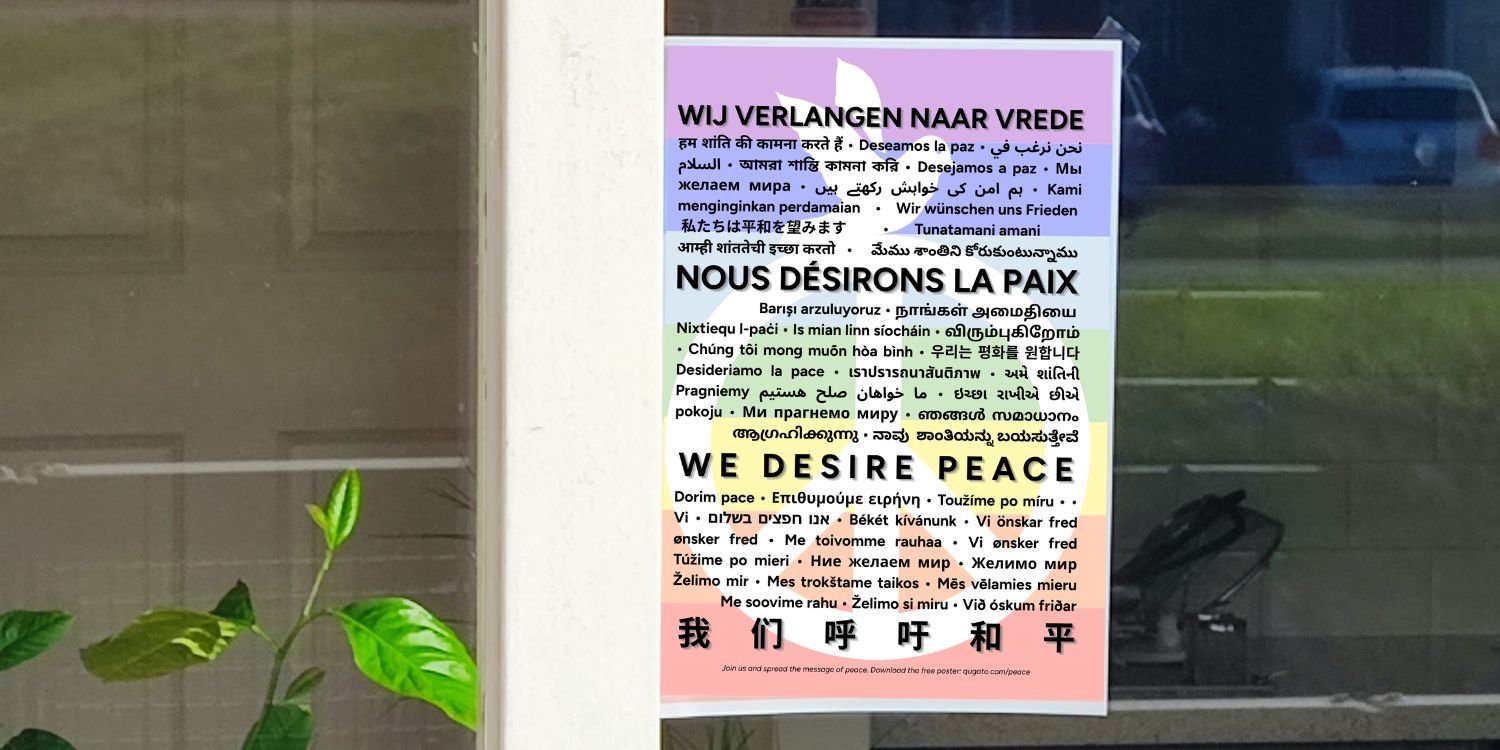
Today, this message may be just as relevant as it was back then. That is why we designed a poster displaying “Nous désirons la paix” translated into the 50 most widely spoken languages in the world.
Because peace is not a national wish. It is a human wish.
👉 Download the free poster here.
Print it. Hang it up. And help spread this simple message: Nous désirons la paix!
Table of Contents
A Message from 1790
While developing our city game City Detective Maastricht, I came across a remarkable facade stone bearing a short French inscription: “Nous désirons la paix.”
Freely translated, it means: “We desire peace.” A message that once again feels painfully relevant today.
What makes this stone particularly special is that it is more than 235 years old.
The facade stone was placed in 1790 by the owner of the building. That was far from an ordinary moment in history. Europe was in turmoil at the time.
Just one year earlier, the French Revolution had begun.
The revolution created enormous political tensions across Europe. In Maastricht too, the threat of war was clearly felt. The owner of the building therefore decided to place a message on the facade: a wish or appeal that was likely shared by many people during that period.
“Nous désirons la paix.”
Interestingly, the French inscription contains a small spelling mistake. But perhaps that only makes the message feel even more human.
• The facade stone “Nous désiron la paix” in Maastricht.
Maastricht and the French Period
The fear of war turned out to be justified.
In 1793, French troops attempted to capture Maastricht, but the siege failed. A year later, in 1794, they succeeded. The city was conquered by the revolutionary French army.
This marked the beginning of the so-called French Period. Maastricht became part of France, bringing major changes:
- Religious institutions were abolished.
- Church properties were confiscated.
- New administrative structures were introduced.
- Civil registration was established.
Daily life in the city changed dramatically. Only after Napoleon’s defeat in 1814 did this period come to an end.
But the facade stone remained. A silent reminder of a time when people feared war and hoped for peace.
A message that feels relevant again today
When I first saw this facade stone, it mainly felt like a fascinating historical detail.
Today, however, the message feels painfully relevant once again.
We are once again living in a time when war dominates the daily news. If you follow the headlines, it can sometimes feel as though the world is becoming increasingly unsettled.
And yet, I believe the message on that facade stone in Maastricht still holds true. Most people simply wish for peace. Just like the owner of that house did in 1790.
Download the free "We desire peace" poster
Spread the message of peace: download the poster, print it and hang it up.Why I find these stories so fascinating
When developing our city games, we often dive deep into the history of a city. We search for stories, small details and places that you might normally walk straight past without noticing.
That is exactly what makes creating a city game so special. You discover stories you might otherwise never encounter.
A small facade stone. An inscription in another language. A wish someone chose to carve into stone 235 years ago…
And suddenly you realise that history does not only live in books. It surrounds us in streets, buildings, and sometimes even in a few simple words on a wall.
Discover the story yourself
The facade stone “Nous désirons la paix” is one of the locations you will encounter during our city game City Detective Maastricht.
During the game, teams explore the city in search of clues to solve a mystery. Along the way, you pass historical locations and discover remarkable stories like this one.
You might normally walk straight past it. But once you know the story, you will see it differently.
And perhaps you will think the same as the owner of that house in 1790: Nous désirons la paix.
Written by: Ricardo Husson, Co-Founder of Qugato